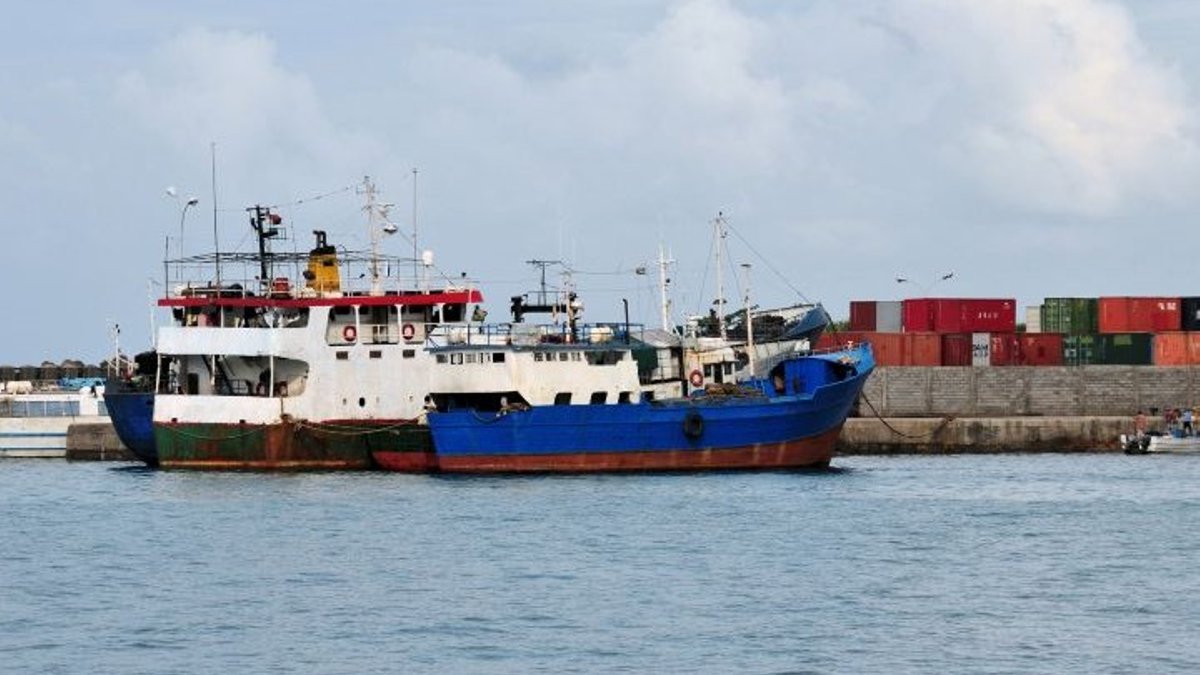
Eduardo Cavalcanti de Mello Filho, a law professor at University College London, posits that states can legally decline to acknowledge flags associated with a shadow fleet, termed “flags of deceit.” This term, coined by Lloyd’s List, describes flag states that intentionally facilitate shadow fleet operations, which involve vessels evading sanctions through false documentation, opaque ownership, and registration under compliant flag states, as noted in Mello Filho’s analysis.
The U.S. Congress recently enacted legislation that requires the President to sanction vessels, the companies that own, insure, or service them, and the foreign ports that let them dock. This law represents the most recent step in a series of unilateral measures directed at Russia’s shadow fleet. Mello Filho bases this right on each state’s interest in safeguarding its own maritime rights and order.
Flag State Accountability
According to the United Nations Convention on the Law of the Sea, a ship in international waters is subject solely to its flag state. Rejecting a deceptive flag would not strip the vessel of its nationality, but it would deny the flag state exclusive jurisdiction, permitting other nations to enforce their laws against the ship. Mello Filho claims that this exclusive authority entails a duty to police ships, which the convention defines as ‘effective control’.
Read Also: Medicare Advantage may save money by limiting care
Mello Filho suggests that the discussion regarding this obligation should move from a state’s capability to exercise effective control to its willingness to do so. He cites countries like Gabon, Cameroon, Comoros, and the Cook Islands, which he asserts intentionally facilitate dark-fleet activities, a problem the capability-based approach cannot resolve. He argues these nations deliberately intend to enable dark-fleet operations.
Challenging Flag State Registration
The International Tribunal for the Law of the Sea’s ruling in M/V Saiga determined that the convention’s ‘genuine link’ requirement does not provide other states a legal basis to contest a ship’s registration. However, Mello Filho interprets this decision more restrictively, arguing the Tribunal conflated two distinct issues—registration validity and recognition—and only ruled on validity.
Mello Filho argues that this distinction permits flag non-recognition if enforcer states provide factual proof that a flag state is unwilling to uphold public order at sea. He maintains that before refusing recognition, enforcers must take preliminary steps, such as contacting their counterparts in the flag state to warn them of a shadow fleet vessel flying its flag and gathering evidence of the state’s refusal to control the ship.
Implementing the Framework
Mello Filho admits that implementing this framework practically is difficult, as is getting flag-state cooperation. Yet he asserts that the financial gains from harboring a shadow fleet are small, so policymakers should not assume non-cooperation. He points to the Cook Islands, which saw one of the world’s biggest increases in ship registries in 2024 due to aging Russian tankers.
Read Also: US Flood Insurance Program Faces Financial Strife
Even though legal theory backs his view, Mello Filho admits it faces practical obstacles. He advises states to reject recognition only via procedures that prioritize fact-finding, diplomatic talks, and registry information sharing. He concludes that the maritime sector would benefit if international law asked if flags are willing to control their ships, rather than just what they can do. This approach, he says, would help states better assess the willingness of flag states to maintain order at sea.
Diplomatic and Procedural Steps for Flag Non-Recognition
States should issue a warning to flag states suspected of sheltering shadow vessels, supported by a report detailing evidence of ineffective control as required under UNCLOS. This report aims to demonstrate that the flag state has failed to exercise its duty of effective control over the ship. Simultaneously, enforcer states should engage diplomatically with their counterparts to address bureaucratic gaps between government agencies, ensuring a coordinated approach to the issue.
The process includes efforts to persuade flag states to deregister shadow vessels or to establish whether they have a “conscious intent” to protect such ships in disregard of maritime rules. This step is key to avoid premature conclusions about a flag state’s unwillingness to enforce UNCLOS.


